

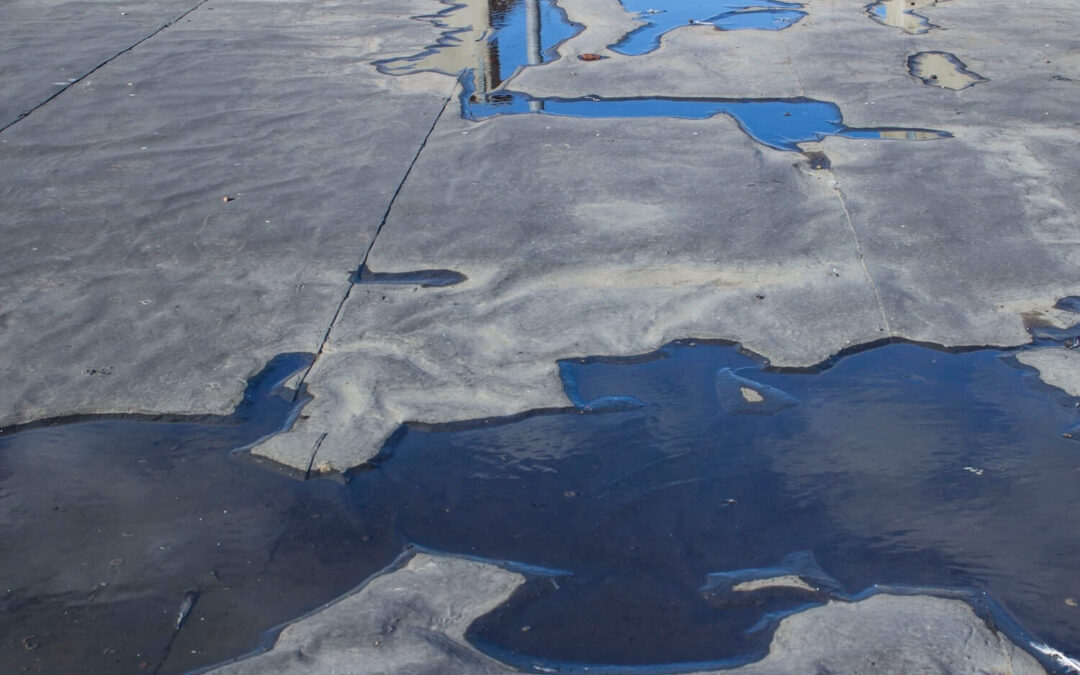
The sun breaks through the clouds after an intense winter storm rolls across Southern California. Down on the ground, business resumes as normal. Inside your commercial facility, the lights are on, equipment is humming, and tenants or employees go about their daily routines. But up above, on the expansive, low-slope surface of your commercial roof, a silent clock is ticking.
If you climbed the access ladder and stepped onto the membrane, you might see several wide, shallow pools of water reflecting the blue sky. To an untrained eye, these lingering puddles look harmless, a natural, temporary consequence of a flat or low-slope roof design. Many property managers and facility directors shrug them off, assuming the California sun will eventually evaporate the water.
However, in the commercial roofing industry, those remaining pools represent one of the most serious threats to your building’s infrastructure and your financial security. A clear line separates a roof that is simply wet from one in progressive failure. That line is known as the 48-Hour Test. Understanding what this test means, why manufacturers enforce it, and how standing water can quietly void your commercial warranty is essential for any property owner looking to protect a major building investment.
Understanding the 48-Hour Roofing Test
The 48-Hour Test is the universal benchmark established by the National Roofing Contractors Association (NRCA) and recognized by major commercial roofing manufacturers worldwide. Ponding water is any standing water that remains on a flat or low-slope roof surface for more than 48 hours after a rain event ends, under ambient conditions conducive to drying.
Why is 48 hours the magic number? A properly engineered commercial roof system uses positive drainage, meaning it is designed with a subtle slope, typically at least one-quarter inch per foot, that channels rainwater to internal drains, scuppers, or gutters within 24 to 36 hours.
When water remains on the roof past the 48-hour mark, it signals drainage failure or structural deck settlement. The water shifts from a routine environmental load to a chronic physical and chemical hazard. At this critical threshold, standing water begins to degrade roofing membranes, actively strain structural deck framing, and violate the explicit terms of your commercial roof warranty.
The Hidden Physics and Chemistry of Standing Water
To understand why manufacturers enforce the 48-hour threshold so strictly, examine the physical and chemical toll stagnant water takes on a commercial roof membrane over time.
Standing water attacks a building through three distinct mechanisms: weight, solar amplification, and biological growth.
1. The Physics of Progressive Deflection
Water is deceptively heavy, weighing about 5.2 pounds per square foot per inch of depth. On a large commercial footprint, a shallow ponding area measuring 1,000 square feet with an average depth of just two inches adds over 5 tons of static load to the building’s structural deck.
This immense weight creates a destructive feedback loop known as progressive deflection. Most commercial roof decks possess a small amount of allowable flexibility between structural joists. When standing water sits on the roof for days, its weight causes the deck to sag slightly. This new depression holds even more water during the next storm, deepening it further. Over several seasons, this cycle can cause permanent structural warping, compressed insulation, and in extreme cases, localized roof deck collapse during heavy atmospheric river events.
2. Solar Amplification and Thermal Shock
In Southern California, a rainstorm is often followed immediately by intense sunshine and high temperatures. When sunlight hits standing water on a flat roof, the water acts like a magnifying glass. It focuses ultraviolet (UV) radiation and solar heat directly onto the submerged roofing membrane.
This concentrated thermal energy accelerates chemical breakdown across all major commercial roof types:
- TPO and PVC Membranes: Highly reflective single-ply membranes are designed to bounce solar energy away. Submerged single-ply membranes experience accelerated plasticizer loss, causing the material to lose its flexibility, chalk, and develop microscopic cracks along heat-welded seams.
- EPDM Systems: Rubber membranes rely on specialized adhesive tapes and sealants at the lap seams. Long-term submersion slowly breaks down these adhesives, opening microscopic pathways for water intrusion.
- Modified Bitumen and Built-Up Roofs (BUR): Constant water exposure leaches essential oils from asphaltic layers, causing the surface to oxidize, dry out, and develop severe cracking known as “alligatoring.”
3. Biological Degradation
Ponding water collects airborne dust, dirt, leaves, and organic debris. Within 48 to 72 hours, these stagnant pools become mini-ecosystems that support algae, moss, lichens, and weeds. As these organisms thrive, they produce organic acids that slowly corrode surface coatings, penetrate flashing seams, and attack metal fasteners, creating hidden entry points for water.
The Warranty Trap: What Building Owners Fail to Realize about Roofing
The most alarming aspect of chronic ponding water is not just the physical damage; it is the financial exposure created by the fine print in your commercial roof warranty.
When a commercial building owner purchases a new roof system, they typically receive a 15-, 20-, or 30-year No Dollar Limit (NDL) warranty from the material manufacturer. Property managers often assume this warranty provides blanket coverage against any leak. In reality, every major commercial manufacturer includes strict exclusions regarding ponding water.
How Manufacturers Inspect Warranty Claims
When a leak occurs and a field technician is dispatched to evaluate a warranty claim, they first look for evidence of chronic ponding. Even if the roof is dry on the day of the inspection, the signs of long-term standing water are unmistakable:
- Tide Lines: Rings of dried mud, silt, and mineral deposits that outline where water previously sat.
- Surface Discoloration: Darkened or chalky areas on single-ply membranes.
- Blistering and Delamination: Separation of membrane layers caused by moisture trapped beneath the surface.
If the manufacturer determines that a leak occurred in an area subject to chronic standing water exceeding the 48-hour limit, they may classify the failure as a result of improper maintenance or lack of positive drainage. The warranty claim can be immediately denied, leaving the building owner solely responsible for tens or hundreds of thousands of dollars in structural repairs, insulation replacement, and interior restoration.
Additional Actions That Can Void Your Warranty
Beyond ignoring standing water, commercial property owners frequently compromise their warranty coverage through other common management oversights:
- Unreported Leaks: Failing to report a leak to the manufacturer within a specified timeframe (often 30 days) can void coverage for subsequent water damage.
- Unauthorized Modifications: Allowing HVAC technicians, solar installers, or tenants to mount equipment or penetrate the membrane without certified flashing details.
- Incompatible Repair Compounds: Using hardware-store mastics or silicone caulk that chemically reacts with and dissolves the primary membrane.
- Lack of Inspection Records: Failing to maintain a documented log of regular, professional bi-annual roof inspections as required by the warranty agreement.
The Four Root Causes of Flat Roof Water Ponding
Resolving ponding water requires a thorough understanding of why it accumulates in the first place. On commercial roofs, ponding generally stems from four primary issues:
- Clogged Drainage Pathways: The most common and easiest to fix cause. Windblown leaves, trash, palm fronds, or asphalt granules accumulate around internal drain bowls, scuppers, and downspouts, blocking water flow.
- Inadequate Design or Settling: Older commercial buildings were sometimes constructed with minimal slope. Over decades, natural structural settling eliminates the original pitch, and creates new low spots.
- Crushed or Saturated Insulation: When water finds a small puncture in the membrane, it saturates the rigid insulation boards underneath. As saturated insulation loses its structural strength, it collapses under foot traffic or rooftop HVAC equipment, creating a localized basin that collects more water.
- Improper Mechanical Curb Placement: Adding new rooftop equipment without adjusting drainage pathways can create physical dams that hold water against parapet walls or curb flashings.
Proactive Strategies to Fix Ponding and Preserve Roofing Coverage
Addressing standing water before it voids your warranty doesn’t always require a full roof replacement. Depending on the age and structural condition of your roof, several targeted solutions can restore positive drainage and extend system life:
- Routine Drain Maintenance: Set up a quarterly or bi-annual schedule to clear drain strainers, scuppers, and gutters to prevent temporary backups during heavy storms.
- Tapered Insulation Crickets: During a reroof or major repair, contractors can install tapered polyisocyanurate insulation crickets. These wedge-shaped boards create artificial ridges that channel water away from dead spots and directly toward drains.
- Siphon or Additional Drain Installation: In low spots caused by structural settling, supplemental roof drains or siphon drainage systems permanently eliminate water accumulation.
- High-Solid Silicone Restoration Coatings: For structurally sound roofs with localized low spots, a professional silicone coating system provides an excellent barrier. Unlike acrylic coatings, which break down when submerged, high-solids silicone is chemically inert to standing water. It can withstand ponding conditions indefinitely while restoring watertight integrity.
The “GreatWay” Standard for Commercial Risk Management
Greatway Roofing has provided premier commercial roofing services across Ventura County, the San Fernando Valley, and the Santa Clarita Valley for over 25 years. As a family-owned business, its mission is to elevate commercial roofing standards through exceptional workmanship and complete operational transparency.
When evaluating a commercial facility, Greatway Roofing conducts an “inside-out” diagnostic walkthrough. Rather than simply applying temporary surface patches, their certified team evaluates drainage pathways, checks insulation moisture levels, inspects flashings around HVAC units, and reviews existing warranty documentation to ensure compliance.
Operating under a strict six-point pledge (Diligence, Accountability, Professionalism, Respect, Integrity, and Clarity), the team provides property managers with real-time photo and video documentation of roof conditions. This transparent reporting gives landlords the evidence they need to verify commercial roof maintenance, track rooftop access, and keep manufacturer warranties intact.
Whether your facility requires a bi-annual maintenance plan, targeted tapered insulation repairs, or a high-efficiency Cool Roof installation, Greatway Roofing delivers the strongest workmanship guarantees in the region. By catching minor drainage defects before they exceed 48-hours, business owners can protect their structural investments and avoid unexpected capital expenditures.
Frequently Asked Questions
How can I tell if my commercial roof has a ponding problem during dry weather?
You can easily spot ponding on a dry roof by looking for distinct “tide lines”, rings of dried mud, dust, and mineral crust left behind as water evaporates. Other indicators include dark patches of dried algae, discolored membrane sections, or areas where surface coatings have begun to flake and peel.
Will a small pool of standing water really cause a roof to leak?
Yes. Over time, constant submersion breaks down seam adhesives, softens single-ply membranes, and accelerates UV degradation. Once the membrane’s protective integrity is compromised, water can easily seep through microscopic cracks, saturate underlying insulation, and drip into the interior workspace.
What is the difference between an acrylic coating and a silicone coating for flat roofs?
Acrylic coatings are water-based and designed primarily to reflect UV on sloped roofs; if they’re exposed to standing water, they can re-emulsify, soften, and wash away. Silicone coatings are moisture-cured and chemically impervious to standing water, making them the industry standard for restoring low-slope commercial roofs with minor ponding issues.
Does my commercial property insurance cover damage caused by ponding water?
Not always. Most commercial property insurance policies exclude gradual wear and tear, manufacturing defects, or lack of routine maintenance. If an adjuster determines that interior water damage resulted from unaddressed, long-term ponding water that compromised the roof structure, the claim may be denied.
How often should a commercial roof be professionally inspected?
A professional roofing contractor should inspect commercial roofs at least twice a year, typically in spring and fall, and after major weather events such as severe windstorms or atmospheric rivers. Regular inspections are required to keep most manufacturer NDL warranties valid.
Can adding new rooftop equipment void my commercial roof warranty?
Yes. Installing new HVAC units, solar panels, or satellite dishes without notifying the original manufacturer, or without using an authorized, certified contractor to install proper flashing details, can immediately void warranty coverage for those sections of the roof.
Conclusion: Protecting Your Structural Investment
The 48-Hour Test is far more than an abstract industry guideline; it is a critical boundary line between a healthy, protected commercial asset and a costly structural liability. Standing water is a persistent threat that utilizes weight, focused heat, and chemical breakdown to expose every weakness in your building’s upper defense.
Ignoring lingering puddles after a rainstorm is a high-stakes gamble that can lead to catastrophic structural decay, business interruption, and the sudden loss of manufacturer warranty protections. By adopting a proactive commercial roof maintenance strategy, monitoring drainage efficiency, and scheduling regular professional evaluations, property managers can ensure their facilities remain dry, safe, and fully covered.
Partnering with an experienced, trusted contractor ensures that your commercial property receives the rigorous care it demands. With a quarter-century legacy of service and an unyielding commitment to quality, Greatway Roofing stands ready to help you navigate commercial roof care with confidence. Protect your facility today, because when it comes to safeguarding your business, positive drainage is the ultimate peace of mind.